Elevate Your Projects with Soft Grainy Gradient Backgrounds
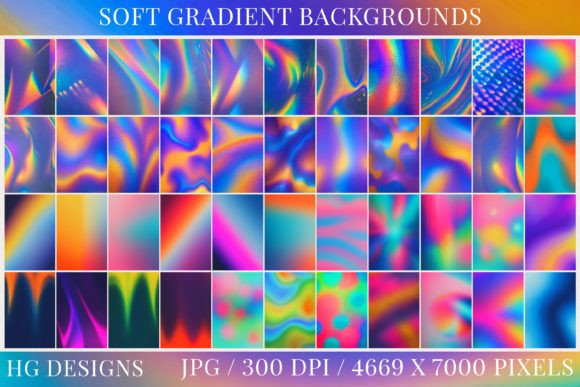
There is a specific texture in modern design that feels both digital and tactile, like a photograph printed on high-quality matte paper or a wall painted with a subtle, chalky finish. This is the core appeal of Soft Grainy Gradient Backgrounds. As a collection of 52 distinct design assets (44 main files plus 8 bonuses), this set moves beyond the standard, hyper-smooth color transitions that have dominated digital interfaces for years. Instead, it introduces a tactile dimension, blending soft color shifts with a film-like grain that adds depth, warmth, and a touch of realism to any composition.
For the designer, entrepreneur, or content creator, these backgrounds solve a common problem: making digital work feel less sterile and more human. The visual personality here is one of quiet sophistication. It does not scream for attention; rather, it creates a mood. The grain breaks up the color, preventing banding issues often seen in standard gradients, while the softness ensures that any foreground element—whether it is text, a logo, or a photograph—remains the star of the show.
The Psychology of Texture in Branding
When we talk about brand identity, we often focus on logo design and typeface selection. However, the background is the stage upon which your brand performs. A completely flat, solid color can feel corporate and rigid. A busy, complex pattern can overwhelm the message. Soft Grainy Gradient Backgrounds strike a necessary balance. They provide enough visual interest to create a "premium font" or high-end aesthetic, but they remain subtle enough to support complex layouts.
Consider the impact on perception. A grainy texture often evokes nostalgia, analog processes, and authenticity. In an era of AI-generated perfection and high-gloss CGI, using a background that mimics the imperfections of film grain can make a brand feel more trustworthy and approachable. This is particularly vital for small business owners and entrepreneurs looking to establish an emotional connection with their audience. Whether you are designing a landing page for a wellness brand or a social media campaign for a boutique coffee shop, these textures provide an instant atmospheric upgrade.
Technical Specifications for Professional Use
Quality matters when scaling design assets. These files are provided as JPGs at 300 DPI, sized at 4669 pixels by 7000 pixels. To break that down practically: these are high-resolution files suitable for both screen and print.
- Digital Use: At 4669 pixels wide, these backgrounds are easily large enough for desktop wallpapers, website hero sections, and high-definition video backgrounds without pixelation.
- Print Use: The 300 DPI resolution ensures crisp output. At this resolution, the files can be printed at roughly 15.5 inches by 23.3 inches. This makes them ideal for packaging design mockups, editorial design covers, or even standalone wall art.
The inclusion of 52 different variations means you have a vast library of moods at your disposal. Some gradients might feature warm, sunset tones suitable for lifestyle branding, while others may offer cool, muted pastels perfect for web design UI elements or modern digital scrapbooking.
Practical Applications Across Industries
The versatility of these assets is where their true value lies. Because they are "soft" and "grainy," they function differently than a standard stock photo or a vector pattern. Here is how different professionals can leverage them:
For Social Media Managers and Marketers
Stop struggling with "blank canvas syndrome." When creating social media graphics, the background sets the tone immediately. Use these gradients behind bold, sans-serif typography to create quote cards that pop. The texture adds a layer of professionalism that a plain white background lacks. Furthermore, the grain helps compress the image better for social platforms, often resulting in a more pleasing aesthetic even when algorithms degrade image quality.
For Graphic Designers and Brand Strategists
These backgrounds are excellent for creating mood boards and brand guidelines. When presenting a new brand identity, showing the logo against a textured gradient demonstrates how the brand adapts to different environments. They also work incredibly well as overlays. Try using a "Multiply" or "Overlay" blending mode in Photoshop to apply these gradients over photographs. This unifies a photo series with a consistent color palette, a technique often used in high-end editorial design and magazine layouts.
For Crafters and Digital Scrapbookers
The digital scrapbooking community will find these particularly useful for layering. The grainy texture mimics traditional paper and ink, bridging the gap between physical and digital crafts. They serve as perfect backgrounds for family photos or journal entries, providing a soft, non-distracting canvas that enhances the focal point of the page.
Integrating with Typography and Design Assets
A background is only as good as the content placed on top of it. When pairing these gradients with typography, readability is the priority. The "grain" in the background adds noise, which means you need to ensure your text has enough contrast to stand out.
Here are a few pairing strategies:
- Bold Sans Serifs: A heavy, geometric sans serif font works beautifully against the softness of the gradient. The sharp edges of the letters contrast with the blurry, textured background, creating a dynamic visual hierarchy.
- Classic Serifs: For a more sophisticated, editorial look, pair these backgrounds with a refined serif font. This combination feels literary and elegant, suitable for book covers or luxury branding.
- Script and Handwritten Fonts: Because the backgrounds are soft, they can support more ornate scripts without the design feeling too cluttered. However, ensure the script is legible at small sizes.
When using these as backgrounds for web design, remember that text over a busy or textured background can cause eye strain. It is often best to place a semi-transparent shape (like a white or dark card) over the gradient and place your text on top of that card, or use the gradient primarily in the "hero" section where text is minimal.
Choosing the Right Gradient for Your Project
With 52 options, selection can be daunting. Don't just pick your favorite color. Instead, evaluate the emotional resonance of the gradient.
- Warm Tones (Pinks, Oranges, Yellows): These evoke energy, optimism, and creativity. They are excellent for lifestyle brands, food blogs, and personal portfolios.
- Cool Tones (Blues, Greens, Purples): These suggest calm, stability, and professionalism. They work well for tech startups, healthcare, and corporate communications.
- Neutral/Muted Tones: These are the most versatile. They provide a sophisticated backdrop that doesn't compete with product photography, making them ideal for packaging design or e-commerce sites.
Always test the gradient in context. Place your logo, your text, and your imagery on top of the background before finalizing. Check the contrast ratio to ensure accessibility standards are met. A beautiful gradient is useless if the user cannot read the "Call to Action" button.
Final Thoughts on Utility and Value
In the world of creative fonts and design assets, versatility is the ultimate feature. Soft Grainy Gradient Backgrounds are not just pretty pictures; they are functional tools for visual communication. They allow you to instantly upgrade a low-effort design into something that looks curated and intentional.
Whether you are a freelancer looking to speed up your workflow, a marketer needing consistent visual branding across channels, or a hobbyist wanting to make your digital memories look more polished, this collection provides the texture and color needed to do so. By understanding the interplay between the grain, the gradient, and your foreground content, you can create designs that feel both modern and timeless.