Topographic Maps Backgrounds: A Designer's Secret Weapon for Texture
If you have spent any time scrolling through modern branding trends on Instagram or Pinterest, you have likely noticed a shift away from sterile, flat backgrounds. There is a growing appetite for designs that feel organic, intellectual, and textured. This is where Topographic Maps Backgrounds enter the conversation. These assets offer a distinct aesthetic that bridges the gap between scientific precision and artistic fluidity. They are not just images of maps; they are intricate patterns of contour lines that suggest elevation, movement, and depth.
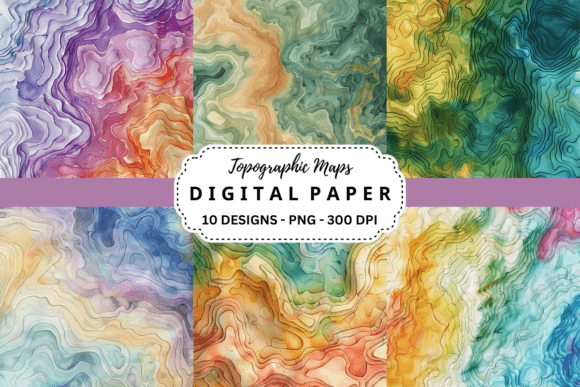
As a creative professional, finding assets that work across multiple platforms without feeling repetitive is crucial. When you acquire a set of high-quality topographic files, you are securing a versatile toolkit for modern typography and layout design. The specific set described here provides ten individual PNG files, each rendered at a massive 3600 x 3600 pixels and a crisp 300 DPI. This resolution is significant. It means these backgrounds are not limited to web use; they are robust enough for large-format printing, heavy enough for high-end packaging, and detailed enough for intricate scrapbooking layouts.
The Visual Appeal of Elevation and Line
Understanding the personality of a design asset is the first step in using it effectively. Topographic maps possess a unique visual language. They consist of concentric, irregular lines that indicate changes in terrain elevation. In a design context, these lines act as a neutral yet complex texture. They provide "visual noise" that prevents a background from feeling empty, but because the lines are uniform in color and weight, they do not compete aggressively with foreground text or imagery.
The style of these backgrounds often evokes a sense of adventure, history, and organic structure. Unlike a geometric grid, which can feel rigid and digital, contour lines flow naturally. This makes Topographic Maps Backgrounds an excellent choice for projects that need to feel grounded and authentic. Whether the color palette is a vintage sepia, a stark black and white, or a muted earth tone, the texture adds a layer of sophistication that flat colors cannot achieve. It transforms a simple layout into a piece of editorial design, giving the viewer the impression that the content has depth and substance.
Strategic Applications for Entrepreneurs and Creatives
The utility of these high-resolution backgrounds extends far beyond simple decoration. For entrepreneurs and content creators, they serve as a foundational element for building a cohesive brand identity. Here is how different professionals can leverage these assets in their daily workflow.
Digital Marketing and Social Media
In the fast-paced world of social media graphics, stopping the scroll is the primary objective. A textured background creates immediate visual interest. You can overlay bold typography on a topographic background to create quote cards, sale announcements, or podcast covers. Because the files are high resolution, they can be cropped aggressively for different aspect ratios—Stories, Reels, or square posts—without losing quality. The texture also helps blend different elements together. If you are placing a product photo over a background, the map lines help integrate the image into the design, reducing the "cut-out" look that plagues amateur designs.
Print on Demand and Packaging
For those in the print on demand space, texture is a valuable commodity. Products like tote bags, throw pillows, and notebook covers benefit immensely from all-over prints. A topographic pattern is gender-neutral and seasonless, making it a safe yet stylish choice for merchandise. In packaging design, these backgrounds can be used on box interiors or tissue paper to create an "unboxing experience" that feels curated and premium. When printed at 300 DPI, the lines remain sharp and legible, contributing to a perception of high quality that customers associate with the product inside.
Event Stationery and Invitations
When designing for weddings, corporate retreats, or adventure-themed parties, the theme often revolves on exploration. Using these backgrounds for invitations card designs sets the tone immediately. Paired with a script font or a serif font, the map texture adds a romantic, wanderlust vibe. Paired with a clean sans serif font, it looks modern and corporate. This versatility makes the asset a staple for stationers and graphic designers who need to adapt to various client briefs.
Integrating Texture with Typography
One of the most common challenges in graphic design is ensuring legibility. A background is only as good as its ability to support the text. Topographic Maps Backgrounds generally feature thin, light lines. This is a distinct advantage. Unlike a photographic background with high contrast shadows and highlights, a line drawing offers a relatively even visual field.
However, as a designer, you must still manage the hierarchy. If you are using a display font for a headline, ensure the background color is distinct enough from the text color to create contrast. A common technique is to place a semi-transparent shape or a gradient overlay between the map and the text. This preserves the texture while ensuring the message remains the focal point. This approach is vital for web design and poster & banner design, where readability at a distance or on small screens is paramount.
Technical Specifications and Workflow Efficiency
Receiving a set of ten distinct files offers significant workflow advantages. Variety prevents your portfolio from looking repetitive. If you are a blogger or a publisher creating multiple assets for a single campaign, you can alternate between different map styles to maintain visual interest while keeping the theme consistent.
The specifications of these design assets—specifically the 3600x3600 pixel dimension—cater to professional standards. This size is ideal for square formats but can easily be adapted to rectangular layouts without needing to stretch or distort the image. The PNG format is particularly useful because it supports transparency. While the map itself is likely opaque, the format ensures compatibility with all major design software, from Adobe Photoshop and Illustrator to Canva and Procreate.
Selecting the Right Style for Your Project
When deciding which of the ten variations to use, consider the emotional resonance of the specific map. Some topographic maps feature dense, close-together lines, indicating steep terrain. These create a high-energy, busy texture suitable for bold, urban logo design or streetwear branding. Others feature wide, sweeping lines suggesting gentle hills or plains. These are better suited for wellness brands, lifestyle blogs, or luxury goods where the vibe is calm and expansive.
Evaluate the color palette as well. If the background is high contrast (black lines on white), it works well for minimalist designs. If it is a muted, textured style, it serves better as a secondary element behind photography. Always test your font pairing against the specific background you choose. A handwritten font might get lost in a dense map, whereas a bold, geometric creative font will stand out clearly.
Commercial Licensing and Final Thoughts
For small business owners, the distinction between personal and commercial use is critical. When purchasing premium fonts or graphics, always verify the license. These types of high-quality assets are typically sold under a license that allows for commercial use, meaning you can use them on products you sell, such as t-shirts, mugs, or digital downloads. However, you usually cannot resell the source files themselves.
Ultimately, Topographic Maps Backgrounds are more than just a passing trend. They represent a shift toward design that values texture, history, and organic movement. Whether you are a designer crafting a new brand identity, a hobbyist working on a scrapbook, or a marketer creating a viral campaign, these high-resolution assets provide the professional polish needed to elevate your work. They are a practical, high-value addition to any creative's digital library.